At a glance
Expert’s Rating
Pros
- Excellent display performance
- Slim design
- Comprehensive camera experience
- Long software support
Cons
- Bloated software
- Messy AI experience
- Divisive curved display
- Limited battery life
Our Verdict
The Motorola Signature pairs a stylish, slim design with a great display and flagship-grade hardware. There’s no lack of power and performance – with a great camera experience – but bloated software, chaotic AI, and sub-par battery life might make you think twice.
Price When Reviewed
This value will show the geolocated pricing text for product undefined
Best Pricing Today
Price When Reviewed
Unavailable in the US
Best Prices Today: Motorola Signature
Motorola has a new flagship phone carrying the Signature name and separating itself from the portfolio of Edge devices that previously made-up Moto’s top tier. This model – just called “Signature” – is the first of the Signature series, with Motorola describing it as “a new ultra-premium franchise”.
That pitches this model high: in previous years, we’ve seen Edge Ultra and Edge Pro models, but Signature sits above those. That’s reflected in the spec sheet, but Signature is also about design, but at a reasonable price of £899. Having started the 2026 models with the Moto Edge 70, the Signature continues the slim trend.
That leads to pros and cons and while Motorola is talking about Signature as a new series of phones, there’s something incredibly familiar about it.
Design & Build
- 6.99mm and 186g
- Textured finish with two Pantone colors
- IP68/69, MIL-STD-810H protection
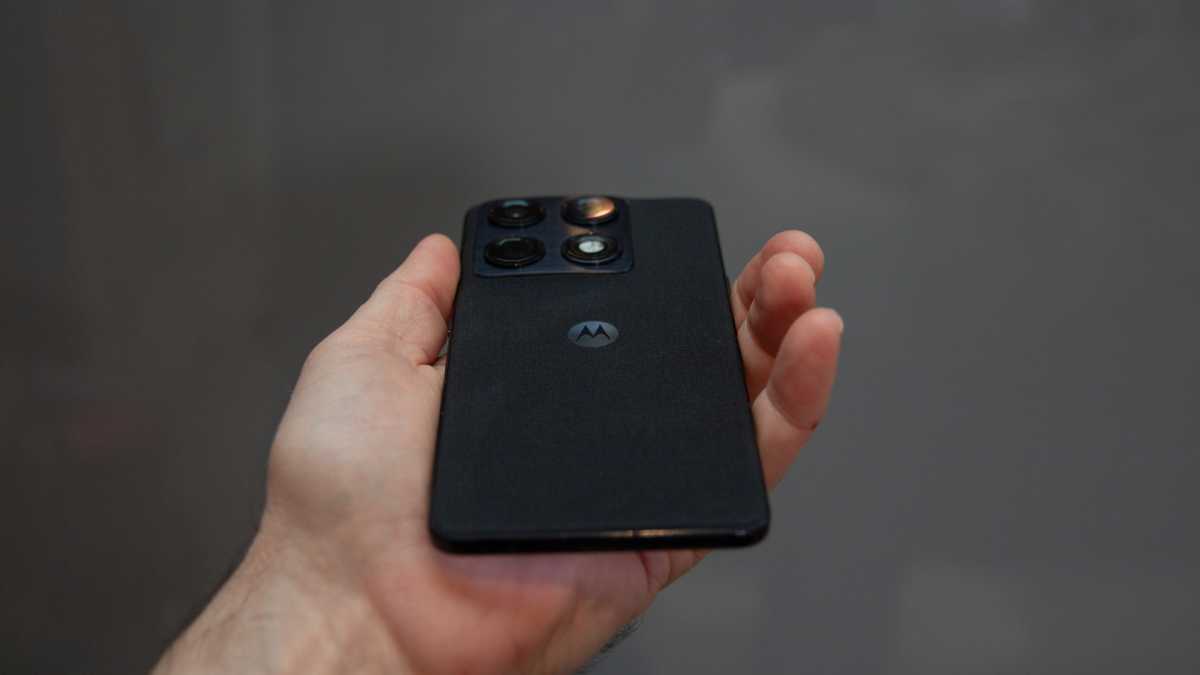
Despite being a ‘new’ series of phones, the Motorola Signature design is exactly what you’d expect: it has a textured finish to the rear, the large camera array in the top left corner, and curved edges smoothly transitioning into the aluminum frame.
The 6.99m thickness is reminiscent of the Edge 70, while the overall design looks very much like other Edge phones from the past year.
In that sense, not much appears to have changed when it comes to the design, but the Signature slots in nicely above the Edge 70, with slightly better credentials over previous Pro and Ultra models.
The textured rear is unique, where most phones on this level are glass
Chris Hall / Foundry
The slim design and those curves make this larger phone a little easier to hold one-handed, but with most devices opting for a flat back and flat front these days, you might accuse this phone as looking slightly old-fashioned. However, if you’re a fan of Motorola design, then you’ll certainly find it here.
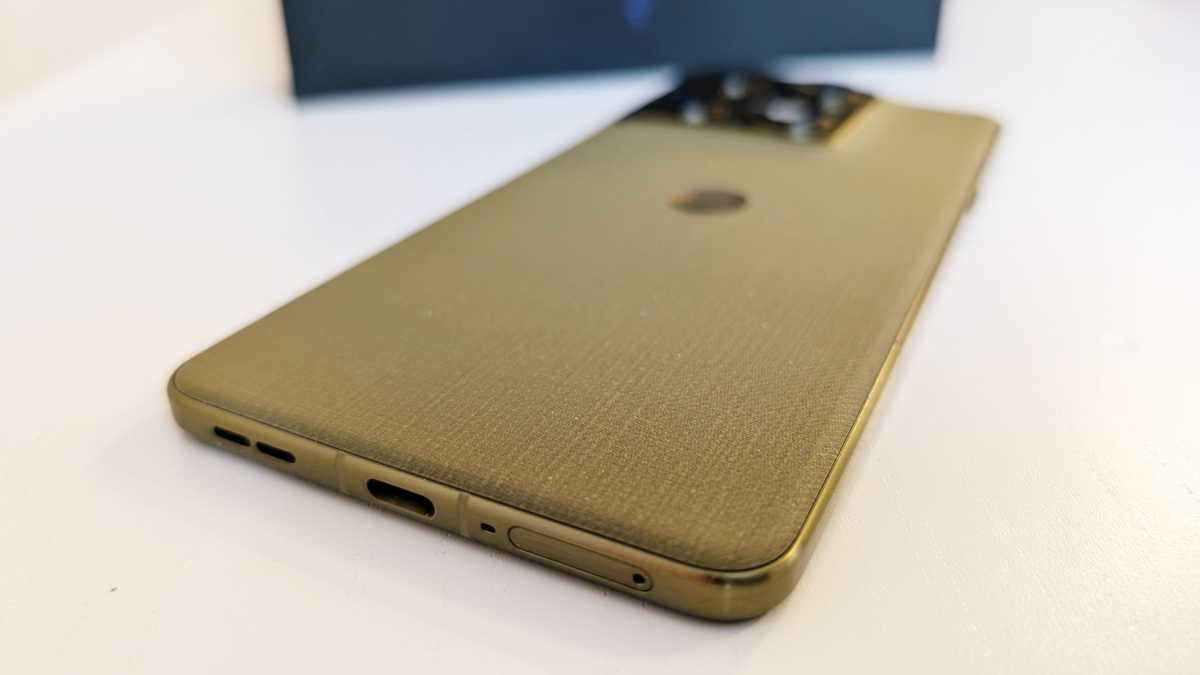
The textured rear is unique, where most phones on this level are glass. It again provides some grip, but during my testing time, I also found it got a bit grubby – it’s a little harder to wipe clean than a glass sheet.
Mattias Inghe
It comes in just two colors: Pantone Carbon (tested here) and Pantone Martini Olive (above via our sister site). Both of which feel quite grown-up compared to some of the loud colors coming from Apple, Google, and others.
Despite the svelte lines, there’s no shortage of protection credentials: IP68 and IP69 certification, as well as MIL-STD-810H drop protection, while the screen is finished with Gorilla Glass Victus 2. That should give some reassurance that it will withstand the rough stuff.
Chris Hall / Foundry
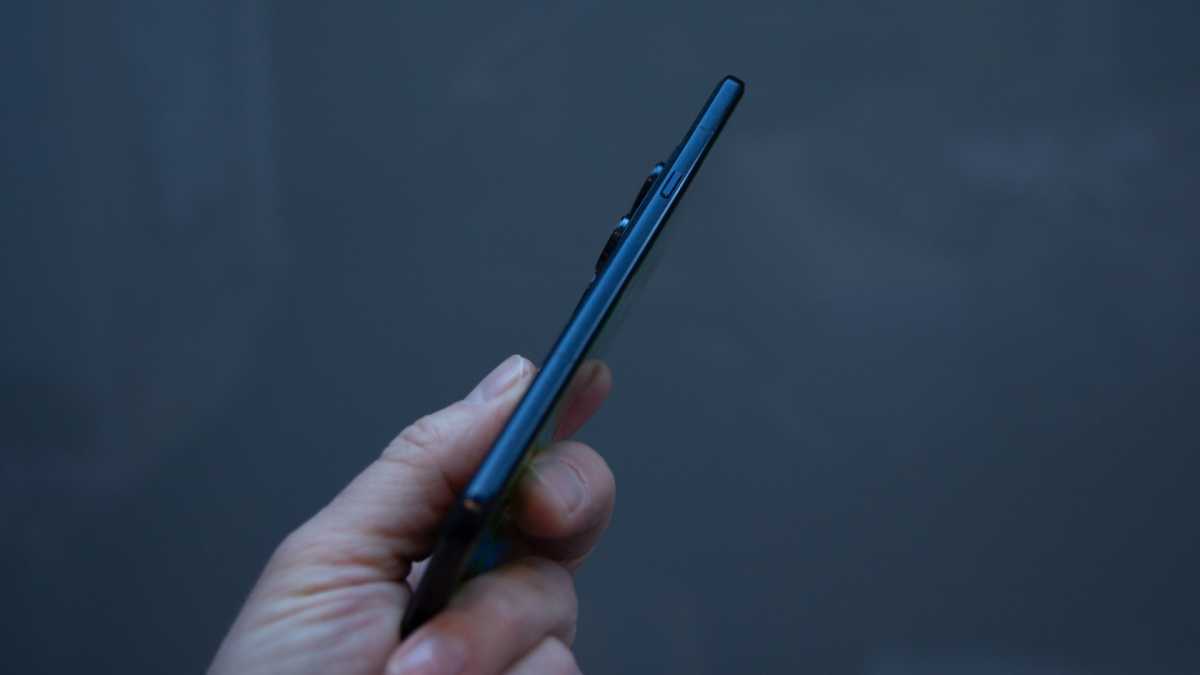
While it’s easy to accuse this phone of looking a little dated, it’s slimmer than average: the OnePlus 15 is 8.1mm thick, the Galaxy S25 Ultra is 8.2mm – so Motorola has taken nearly a full millimeter off that, although there is a compromise, as I’ll explain below.
Screen & Speakers
- 6.8-inch, 2780 x 1264 OLED
- 165Hz LTPO
- Stereo speakers
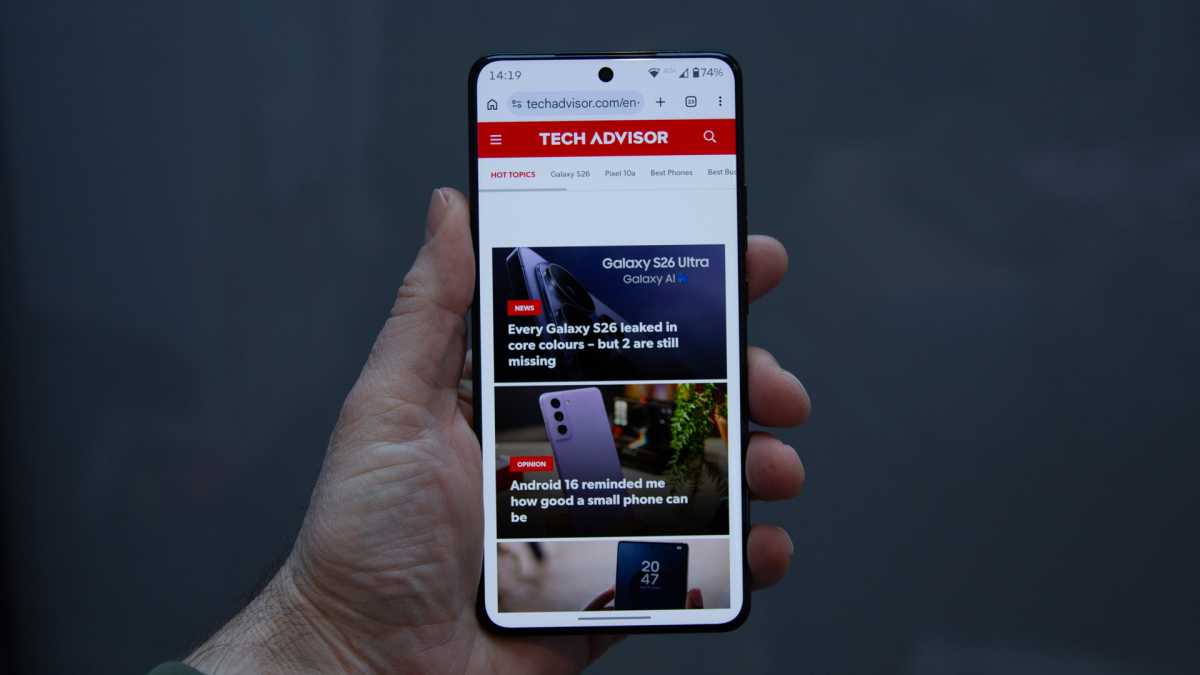
Motorola has thrown everything into this display, which on paper, is one of the best screens you’ll find on a modern phone. The 6.8-inch size puts this towards the larger end of the spectrum, while the 165Hz refresh rate definitely puts this at the top of the pack.
That 165Hz mode is only available when gaming and using Moto’s Gametime app and even in those conditions, I was still only able to get Call of Duty Mobile to run at 120fps. This is an LPTO display, so will give a variable refresh rate depending on what you’re using it for – down to 1Hz – which is great for efficiency.
Not only does this phone screen have a high resolution – with 450ppi – while there’s also a reported 6200 nits peak brightness. That’s there to drive the impact of HDR and you won’t get those retina-searing highs across the whole screen in general use.
The display on the Motorola Signature is impressive and a pleasure to use
Chris Hall / Foundry
That’s most noticeable in the delivery of Ultra HDR content in Google Photos where images look great. This phone also has a trick up its sleeve with Dolby Vision video capture which looks great on the display – although while the highlights get to take advantage of that HDR punch, Dolby Vision can reduce the overall brightness of the picture to increase the dynamic range.
The display on the Motorola Signature is impressive and a pleasure to use. I’ve found it detailed and colorful, with options to tweak the visuals to your preference. The only complaint I’d have is that as a gamer, a flat screen offers a better experience.
There’s Dolby Atmos labeling on the Motorola Signature with the stereo speakers attempting to spread that audio for a more immersive experience. The speakers have decent volume, but can get a little shrill at higher volumes, while there’s not a huge amount of bass.
Still, for ad hoc video watching and gaming, it’s fine.
Specs & Performance
- Snapdragon 8 Gen 5 chipset
- 16GB RAM
- 512GB storage
this hardware offers a good compromise between top performance and value for money
Where the Motorola Signature steps up from the Edge 60 Pro (the previous top-tier device with a MediaTek 8350) is in the chipset. Packing the Qualcomm Snapdragon 8 Gen 5, this is flagship-level hardware, but a notch down from the Snapdragon 8 Elite Gen 5 found in the likes of the Honor Magic 8 Pro or the OnePlus 15.
That makes a minor difference to the performance, but playing Call of Duty Mobile and PUBG I really didn’t notice any difference, although the inability to hit those 165Hz frame rates, which the OnePlus 15 can, is perhaps indicative.
For the majority of users, this hardware offers a good compromise between top performance and value for money – and it’s one of the reasons why this phone is £899 rather than around £1,000.