Apple has quietly transformed recent AirPods into the most intelligent audio devices on the market with a range of features called Adaptive Audio. These features are available on various AirPods models released by Apple in the past three years — including the AirPods Pro 2, the AirPods Pro 3, or AirPods 4 with ANC — but you might not be utilizing them to their full potential.
All you need is one of these AirPods models and an iPhone running at least iOS 17, though if you’re still using an older model like the AirPods 3, these features might tempt you to consider an upgrade.
Conversation Awareness
Have you ever noticed that when you start talking to someone while wearing your AirPods and listening to music or other content, the volume automatically decreases? This feature, known as Conversation Awareness, is so seamless that it’s often mistaken for a glitch due to its effectiveness.
When activated, your AirPods can detect when you’re engaged in a conversation and automatically lower the media volume. Simultaneously, the voice of the person you’re speaking to is enhanced. This feature allows AirPods users to have live conversations without needing to adjust their iPhone or remove an AirPod.
Here’s how to enable Conversation Awareness:
- Ensure your AirPods are in your ears and connected to your iPhone.
- Open the Control Center by swiping down from the top-right corner of your iPhone screen.
- Press and hold the volume slider until additional controls appear.
- Tap Conversation Awareness.
You can also activate this feature by selecting your AirPods in the Settings app and finding the toggle option there. Just keep in mind that singing or humming can also trigger it, so you might not want to keep it on all the time. You can easily turn it off by following the same steps as above.
Adaptive Audio
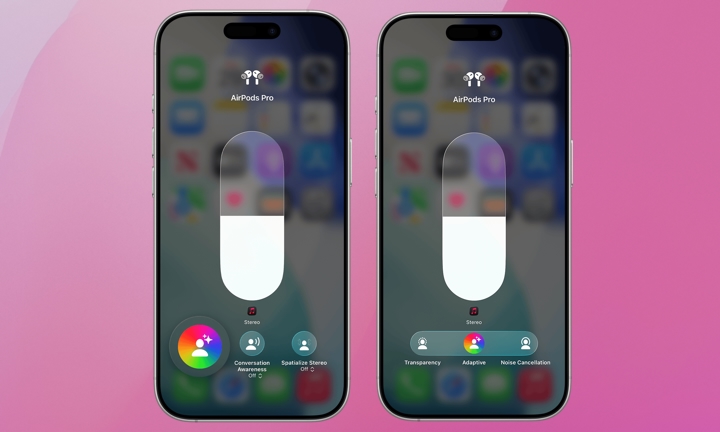
Adaptive Audio offers more than just Conversation Awareness. It combines Active Noise Cancellation (ANC) with Transparency mode to provide the best of both worlds. When Adaptive Audio is active, your AirPods adjust what you hear through the headphones based on your surroundings and the content you’re listening to using an AI-powered algorithm.
While it’s not flawless, it generally works quite effectively. If you’re moving around in a noisy outdoor environment, you’ll likely prefer it over the more extreme settings of ANC or Transparency mode, making it especially beneficial for commuters.
To enable Adaptive Audio, with your AirPods in and connected to your iPhone, follow these steps:
- Open the Control Center by swiping down from the top-right corner of your iPhone screen.
- Press and hold the volume slider until additional controls appear.
- Tap the Listening Mode button in the lower-left corner.
- Select Adaptive.
You can use the same method to switch between Transparency and Noise Cancellation modes.
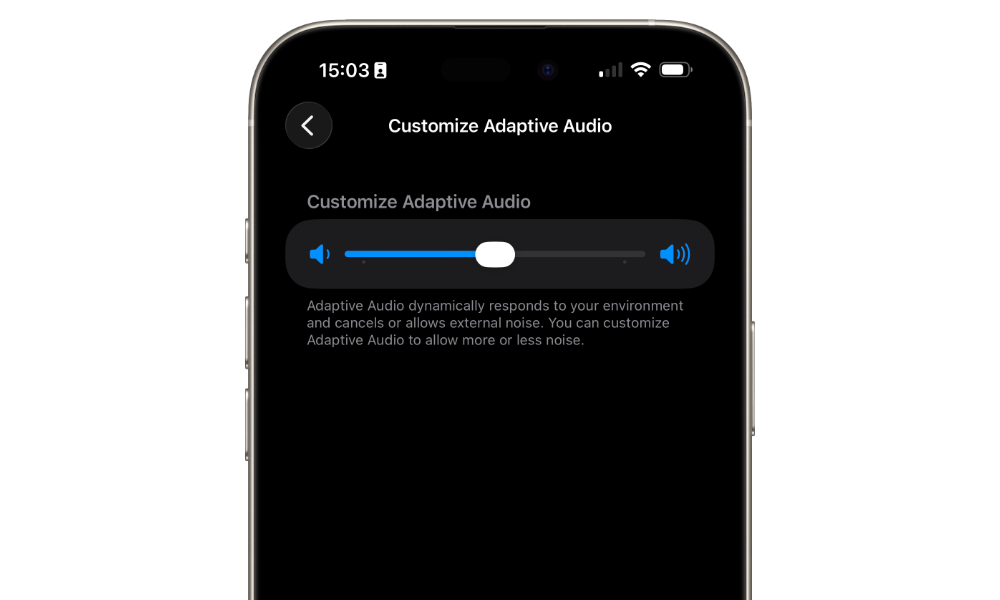
Pro Tip: You can customize your Adaptive Audio mix in the Settings app while wearing your AirPods. Select your AirPods near the top of the settings, choose Adaptive Audio, and adjust the slider to block out more noise or hear more of your surroundings.
Personalized Volume
Apple’s Adaptive Audio also allows users to set personalized levels for Transparency and ANC using a feature called Personalized Volume. This feature learns your listening preferences over time and intelligently adjusts media volume based on your settings and volume preferences.
Here’s how to configure this:
- Ensure your AirPods are in your ears and open the Settings app on your iPhone.
- Tap on your AirPods near the top of the screen.
- Scroll down and activate Personalized Volume.
Keep in mind that it may take a few days for your iPhone and AirPods to adapt to your listening habits.
These advanced features of AirPods may come as a pleasant surprise. The AirPods Pro 2, for instance, were approved by the FDA as hearing aids in 2024. However, many users may not be fully aware of these capabilities or how to make the most of them. If you own compatible AirPods, be sure to experiment with Adaptive Audio and switch between listening modes. If the default settings feel disorienting, further refine them with Personalized Volume.
One minor drawback is that Conversation Awareness can sometimes be overly sensitive, triggered by coughs or throat-clearing sounds rather than actual speech, and it only activates when you speak first, not when someone else does. This limitation is understandable to prevent constant volume adjustments when multiple people are talking around you. Perhaps Apple’s next innovation for AirPods will involve detecting when someone is directly addressing you.